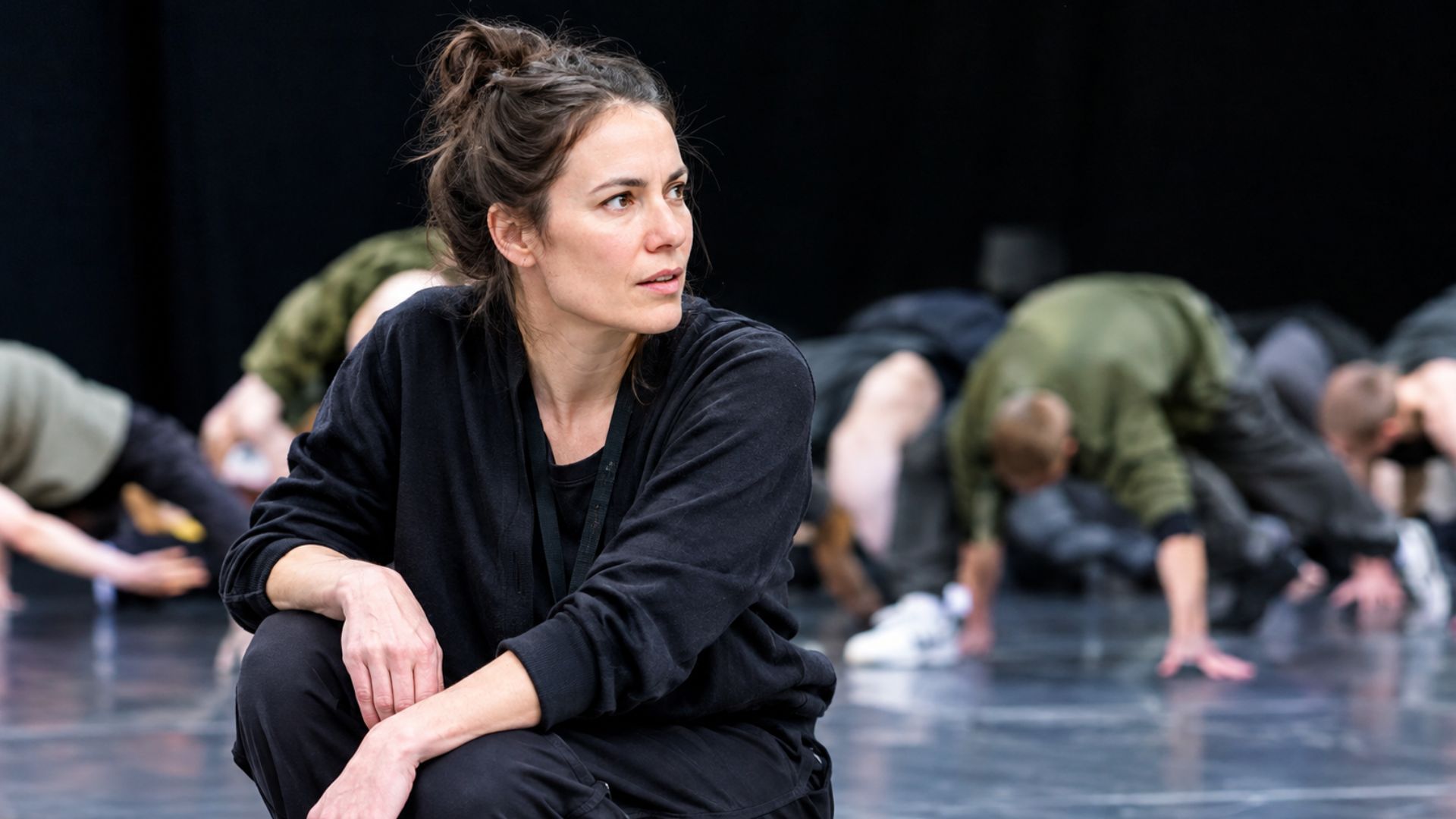

Rosie Kay is a British choreographer, dancer, director and creative artist known for creating ambitious contemporary dance works that connect movement with real-world subjects. Throughout her career, she has explored themes including identity, conflict, military life, politics, relationships and human behavior. Rather than limiting choreography to traditional theatrical ideas, Kay has developed a distinctive approach based on detailed research and direct observation. Her work has taken her from the contemporary dance world into collaborations involving the military, academia, film and major international events.
Quick Bio
| About Her | Details |
|---|---|
| Full Name | Rosie Kay |
| Date of Birth | 27 March 1976 |
| Birthplace | Scotland |
| Profession | Choreographer, Dancer, Director, Writer and Speaker |
| Education | London Contemporary Dance School |
| Graduation | 1998 |
| Known For | 5 SOLDIERS, 10 SOLDIERS, MK ULTRA and major choreography projects |
| Dance Company | Rosie Kay Dance Company |
| Current Creative Company | K2CO |
| Fields of Interest | Contemporary Dance, Choreography, Research, War and Society |
| Notable Recognition | Bonnie Bird Choreography Award and National Dance Awards recognition |
Early Life and Dance Training
Rosie Kay was born in Scotland on 27 March 1976 and developed an interest in dance from an early age. Her formal professional training eventually took her to the London Contemporary Dance School, where she graduated in 1998. The training provided her with a strong foundation in contemporary dance and performance, while her later career demonstrated that she was interested in much more than movement alone.
After completing her education, Kay built experience as a professional dancer and performer. Her early career involved working internationally, including opportunities in countries such as Poland, France, Germany and the United States. These experiences helped broaden her understanding of different performance environments and artistic traditions.
Establishing Herself as a Choreographer
Kay gradually moved toward choreography and began developing her own artistic voice. In 2004, she established the Rosie Kay Dance Company, creating a platform through which she could develop large-scale contemporary dance productions.
Her choreography became particularly distinctive because she often investigated a subject before translating it into movement. Instead of beginning with abstract dance ideas alone, she frequently combined interviews, observation, research and physical experimentation. This method allowed her productions to address complicated social and political subjects while remaining strongly rooted in physical performance.
Over the years, her work gained recognition for its combination of powerful choreography, research-driven storytelling and challenging subject matter.
5 SOLDIERS and Military Research
One of Rosie Kay’s most recognized productions is 5 SOLDIERS: The Body is the Frontline. The project examined the physical and emotional experience of military personnel through contemporary dance.
What made the production unusual was the depth of research behind it. Kay spent time with members of the British Army and participated in military training and exercises to better understand the physical demands and routines experienced by soldiers. She observed how soldiers moved, trained and worked together before translating those experiences into choreography.
The result was not simply a theatrical representation of soldiers. Instead, it explored the body as an important part of military life, considering discipline, endurance, teamwork and vulnerability.
The production attracted significant attention because it demonstrated how contemporary dance could investigate a subject that audiences might normally associate with documentaries, journalism or theatre rather than dance.
10 SOLDIERS
Kay later expanded the military theme with 10 SOLDIERS, a larger production that continued examining army life. The work explored military training, friendship, teamwork, discipline and the transition between military environments and ordinary life.
The choreography placed the physical body at the center of the story. Movements could communicate strength and precision while also revealing exhaustion, tension and emotional pressure. This combination helped make the production an important example of Kay’s research-based creative method.
Her military projects also contributed to wider discussions about how art can approach subjects that are often difficult to represent. Rather than presenting a simple political argument, Kay used dance to examine the human experience behind military structures.
MK ULTRA and Experimental Work
Another significant project in Kay’s career was MK ULTRA, created in collaboration with filmmaker and cultural commentator Adam Curtis. The production explored ideas surrounding conspiracy theories, politics, popular culture and contemporary society.
The work demonstrated another side of Kay’s artistic interests. While her military productions focused heavily on physical experience and institutional life, MK ULTRA moved toward psychological and cultural territory.
Kay has consistently shown an interest in subjects that challenge audiences to think differently. Her productions often combine physical movement with ideas that may initially appear outside the traditional boundaries of contemporary dance.
Commonwealth Games Choreography
Rosie Kay also worked on major public events. One of her notable achievements was choreographing the live handover ceremony for the 2018 Commonwealth Games, as the event moved from Australia toward Birmingham.
The project gave Kay an opportunity to work on a much larger scale than a conventional theatre production. It required choreography capable of communicating with a huge audience while functioning within a major international sporting event.
This experience demonstrated her ability to move between experimental contemporary dance and large-scale public performance.
Academic Research and the University of Oxford
Kay’s interest in research has also extended into academia. She became the first Leverhulme Artist in Residence at the University of Oxford’s School of Anthropology. Her work there brought together artistic practice and academic investigation.
Her research interests have included the relationship between dance, anthropology, war and choreography. This academic dimension is important to understanding her career because research has repeatedly influenced the way she develops performances.
For Kay, choreography can function as a method of investigation. Movement is not merely something performed on stage; it can also be used to explore how people behave, communicate, train and respond to their environments.
K2CO and a New Creative Chapter
After the period associated with the Rosie Kay Dance Company, Kay established K2CO in 2022. The company provided a new platform for her continued work as a choreographer and creative director.
Her professional activities have expanded beyond traditional dance production, incorporating writing, speaking, creative direction and research. This reflects the broader direction of her career, in which choreography has become one part of a larger creative practice.
Kay has also become involved in conversations surrounding artistic freedom and creative expression. In 2023, she and Denise Fahmy established Freedom in the Arts, reflecting her interest in the wider environment in which artists create and present their work.
Rosie Kay’s Creative Legacy
Rosie Kay’s career stands out because she has repeatedly used dance to investigate subjects that exist beyond the conventional boundaries of performance. Her work demonstrates that choreography can be a tool for research, storytelling and social observation.
From contemporary dance training to internationally recognized productions, military research, academic work and large-scale public events, Kay has developed a career based on curiosity and experimentation.
Her most important contribution may be the way she connects physical movement with real human experiences. Whether examining soldiers, political ideas, culture or artistic freedom, she approaches her subjects through research before transforming them into performance.
Today, Rosie Kay remains an important figure in contemporary choreography, with her work continuing across creative direction, dance, research and writing. For readers interested in contemporary performance and the relationship between art and society, her career provides an especially interesting example of how dance can become a powerful form of investigation. Her evolving body of work also continues to demonstrate why research and creativity can work together to produce performances that reach beyond the stage. For more engaging biographies and profiles of notable personalities and creative figures, readers can explore more articles on Mating Press.
FAQs About Rosie Kay
Who is Rosie Kay?
Rosie Kay is a British choreographer, dancer, director, writer and speaker known for research-driven contemporary dance productions.
When was Rosie Kay born?
Rosie Kay was born on 27 March 1976 in Scotland.
What is Rosie Kay best known for?
She is particularly known for productions including 5 SOLDIERS, 10 SOLDIERS and MK ULTRA, as well as her work on major public events.
What is 5 SOLDIERS about?
5 SOLDIERS explores the physical and emotional experiences of military personnel. Kay conducted extensive research with the British Army while developing the production.
Did Rosie Kay work with the British Army?
Yes. Her research for 5 SOLDIERS involved spending time with British Army personnel and participating in military training activities to understand their experiences.
What is K2CO?
K2CO is the creative company established by Rosie Kay in 2022 through which she has continued her work as a choreographer and creative director.
Has Rosie Kay worked in academia?
Yes. She became the first Leverhulme Artist in Residence at the University of Oxford’s School of Anthropology and has undertaken research connecting dance with anthropology and other subjects.
What is Rosie Kay’s approach to choreography?
Her approach combines contemporary dance with research, observation and real-world experiences. She often investigates a subject extensively before transforming her findings into choreography.
You May Also Readr https://matingpresss.co.uk/