Mating Press Diagram: A Clear Guide to the Position, Anatomy, and Common Questions

The term Mating Press Diagram often appears in discussions about anatomy, body positioning, and internet culture. While the phrase may sound technical, it generally refers to a simplified visual representation that explains how the mating press position is aligned. Educational diagrams focus on posture, body mechanics, and positioning rather than artistic detail. Understanding the concept through a clear explanation can help readers distinguish between internet slang and the actual body alignment the term describes.
What Is a Mating Press?
If you have ever wondered what is a mating press, it is a term used to describe a position in which one partner is above while the other lies on their back with their legs raised toward the chest or shoulders. The upper partner remains close, creating a compact body alignment.
Although the phrase originated in Japanese internet culture, it has since become widely recognized in online discussions, memes, and educational articles. Today, it is commonly referenced when explaining body positioning or discussing the origins of certain internet expressions.
Understanding a Mating Press Diagram
A Mating Press Diagram is designed to simplify the position using basic illustrations or anatomical outlines. Instead of focusing on artistic detail, these diagrams typically highlight how the body is positioned from different angles.
A well-designed diagram may include:
- Body alignment
- Hip positioning
- Leg placement
- Knee angle
- Spine posture
- Direction of movement
- Overall partner positioning
Because diagrams rely on labels and arrows, they provide a much clearer understanding than a written description alone.
How the Mating Press Position Is Structured
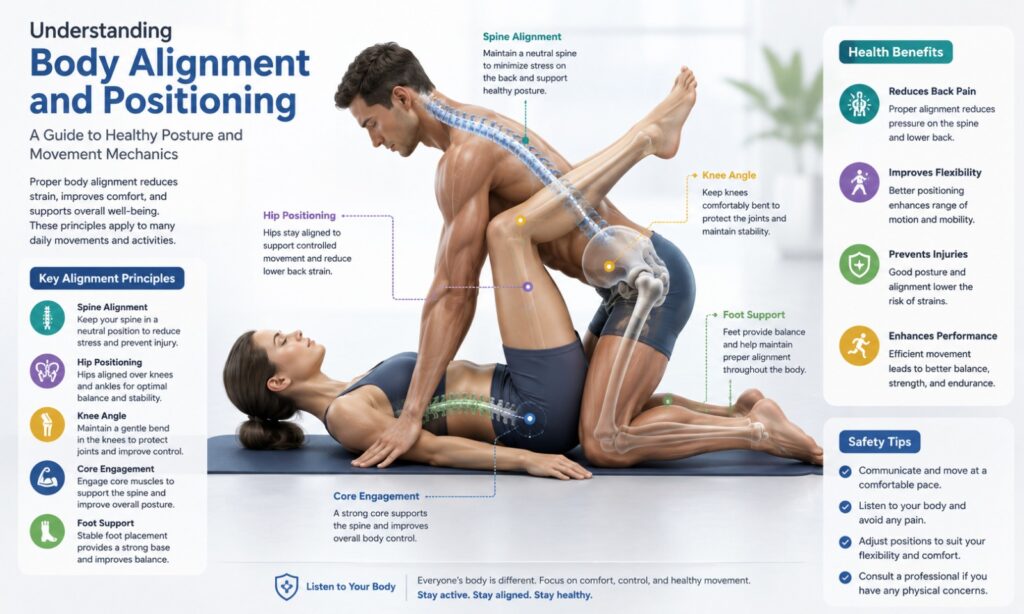
The mating press position is known for its close body contact and compact posture. In its most basic form, one partner remains on their back while the other stays positioned above.
Several physical elements define this posture:
- Legs are elevated toward the upper body.
- The hips remain aligned to maintain balance.
- The upper body stays relatively close throughout the position.
- Weight is supported carefully to improve comfort.
- Proper communication helps both partners adjust positioning as needed.
Like any physical posture, flexibility varies from person to person, and adjustments are often made for comfort.
Why Diagrams Are Useful
Visual explanations make complicated positions much easier to understand. Rather than relying on lengthy descriptions, diagrams present information in a structured format.
Some advantages include:
- Easier understanding of body alignment
- Clear identification of posture
- Helpful educational reference
- Better visualization of movement
- Reduced confusion about positioning
Many anatomy books and educational resources use similar illustrations because they communicate information quickly and accurately.
The Origin of the Term
The phrase traces its roots to Japanese media and internet communities, where it became associated with manga and animation before gradually spreading into English-language online culture.
Over time, the expression evolved beyond its original context and is now recognized in internet memes, discussions, and educational content explaining body positions and terminology. While the name may sound unusual to newcomers, its widespread use has made it a familiar phrase across many online communities.
Anatomy and Body Mechanics
When viewed from an anatomical perspective, the position involves coordinated movement between the hips, knees, lower back, and core muscles. Maintaining proper posture is essential for comfort and balance.
Important anatomical considerations include:
- Keeping the spine in a comfortable position
- Avoiding excessive pressure on joints
- Maintaining stable hip alignment
- Using flexibility rather than force
- Adjusting angles according to individual comfort
Educational illustrations often emphasize these principles rather than focusing solely on the overall pose.
Common Misconceptions
Several misconceptions surround this position because of its internet popularity. One common misunderstanding is that every illustration is intended to be explicit. In reality, many diagrams are created purely for educational purposes, showing posture and anatomical alignment without unnecessary detail.
Another misconception is that everyone can comfortably perform the position exactly as illustrated. Individual flexibility, body proportions, and physical limitations differ significantly, so adjustments are often necessary.
Finally, the phrase itself is sometimes mistaken for a medical or scientific term. It is actually an informal expression that gained recognition through online communities before becoming more widely understood.
Educational Value of Position Diagrams
Diagrams have long been used in educational settings because they simplify complex information into easy-to-follow visuals. Whether explaining sports movements, yoga poses, or anatomy, illustrations help readers understand positioning much faster than text alone.
The same principle applies here. A carefully designed educational illustration focuses on:
- Body posture
- Relative positioning
- Joint alignment
- Safe movement
- Overall mechanics
This makes the concept easier to understand without requiring extensive written explanations.
Frequently Asked Questions
1. What is a mating press?
It is a body position where one partner is above while the other lies on their back with their legs raised toward the chest or shoulders, creating close body alignment.
2. What does a Mating Press Diagram show?
It illustrates body posture, leg placement, hip alignment, and overall positioning using simplified educational drawings.
3. Is the term medical?
No. It is an informal expression that originated in Japanese internet culture and later became common in English online discussions.
4. Why are diagrams used instead of photographs?
Diagrams provide a clear, simplified explanation of anatomy and positioning while avoiding unnecessary visual complexity.
5. Can body positioning vary?
Yes. Individual flexibility, height, and comfort levels differ, so the position can be adjusted to suit each person’s physical abilities.
Final Thoughts
Understanding the concept behind a Mating Press Diagram becomes much easier when viewed as an educational illustration rather than simply an internet phrase. Diagrams help explain posture, body mechanics, and alignment in a straightforward manner, making the concept accessible to readers who want clear and factual information. As internet terminology continues to evolve, educational content plays an important role in separating popular slang from accurate explanations. At The Mating Press, our goal is to provide informative, well-researched articles that explain trending topics in a clear, professional, and reader-friendly way.
Also Read | Reverse Mating Press: Meaning, Origin, Internet Culture, and What It Really Means