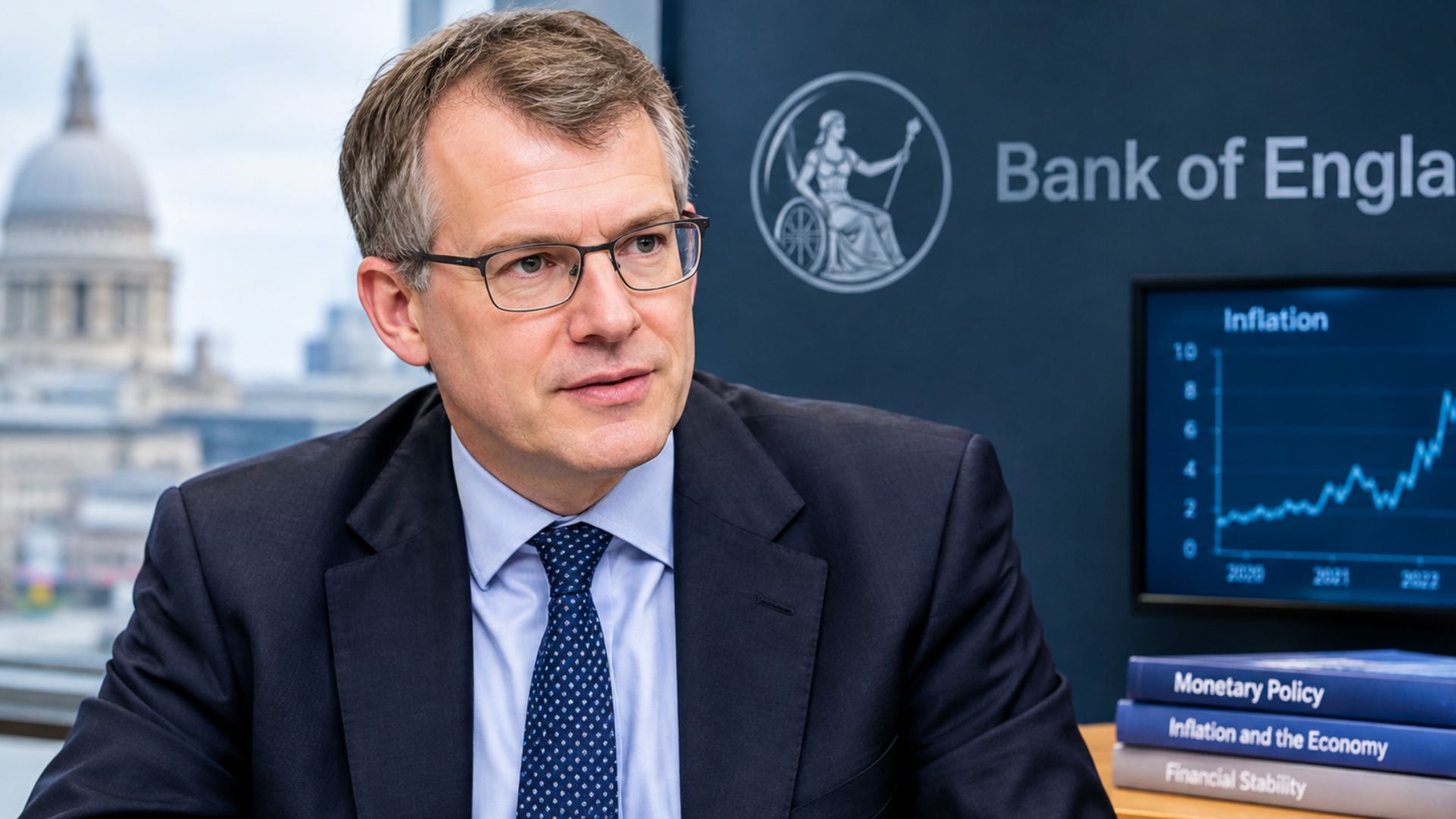

Huw Pill is a British economist best known for his work at the Bank of England, where he served as Chief Economist and Executive Director for Monetary Analysis. Over the years, his career has connected academic economics, central banking, international finance, and economic policy. His public comments have frequently focused on inflation, interest rates, wages, household finances, and the challenges facing the UK economy. Because of his prominent role in explaining monetary policy, Huw Pill has become a familiar name in discussions about Britain’s economic direction.
Quick Bio of Huw Pill
| Detail | Information |
|---|---|
| Full Name | Huw Pill |
| Profession | Economist and Central Banker |
| Nationality | British |
| Field | Economics and Monetary Policy |
| Education | University of Oxford and Stanford University |
| PhD | Economics, Stanford University |
| Known For | Bank of England monetary policy and economic analysis |
| Former Role | Chief Economist, Bank of England |
| Areas of Expertise | Inflation, monetary policy, financial markets and macroeconomics |
Who Is Huw Pill?
Huw Pill is an economist with extensive experience in monetary policy and international economics. His professional career has included work at the Bank of England, Harvard University, the European Central Bank, and Goldman Sachs. This combination of academic, central-bank, and financial-market experience has given him a broad perspective on economic policy.
He became particularly well known in the United Kingdom after taking on a senior position at the Bank of England. As Chief Economist, he was responsible for contributing to the institution’s economic analysis and helping communicate its assessment of inflation, growth, employment, and financial conditions.
Huw Pill’s Education
Pill developed his academic foundation at the University of Oxford, where he studied Philosophy, Politics and Economics. His studies provided a broad understanding of political institutions, economic theory, and public policy.
He later continued his education in the United States and earned a PhD in economics from Stanford University. His advanced academic training helped establish the foundation for a career involving economic research and monetary-policy analysis.
His educational background is particularly relevant to his later career because central banking requires an understanding of both theoretical economics and real-world financial conditions.
Early Career at the Bank of England
Huw Pill’s connection with the Bank of England began relatively early in his professional career. He worked at the institution as an economist during the early 1990s.
After leaving the Bank of England, he expanded his experience through academic and international positions. His career subsequently included work connected with Harvard University and the European Central Bank. These roles exposed him to different approaches to economic research and monetary policy.
His experience outside the UK later became an important part of his professional profile, giving him exposure to both European and American economic institutions.
Experience at Goldman Sachs
Another important stage of Pill’s career was his time at Goldman Sachs, where he became involved in European economic analysis. Working within a major global financial institution gave him insight into financial markets and the way investors respond to economic policy.
The experience was different from working inside a central bank. Financial institutions closely monitor interest rates, inflation, currencies, government policies, and economic forecasts because these factors can influence markets and investment decisions.
This combination of financial-market knowledge and central-bank experience became one of the distinguishing features of Pill’s professional background.
Huw Pill and the Bank of England
In 2021, Huw Pill returned to the Bank of England in a senior leadership position as Chief Economist and Executive Director for Monetary Analysis. The appointment placed him at the center of the UK’s economic policy discussions.
The Chief Economist plays an important role in interpreting economic developments and contributing to the Bank’s monetary-policy decision-making process. Inflation is particularly important because the Bank of England has a responsibility for maintaining price stability around its inflation target.
During Pill’s time in the role, the UK experienced major economic challenges, including elevated inflation, higher energy costs, supply pressures, labour-market difficulties, and rapidly changing interest rates.
Huw Pill’s Views on Inflation
Inflation became one of the central subjects associated with Pill’s public speeches and interviews. He discussed the difficulty of bringing inflation down when price pressures become embedded across the economy.
Inflation can be influenced by several factors at the same time. Energy costs, food prices, wages, supply disruptions, consumer demand, and expectations can all contribute to changing price levels. For central banks, the challenge is to reduce persistent inflation without causing unnecessary damage to economic activity.
Pill has emphasized that monetary policy must respond to persistent inflationary pressures. Higher interest rates can reduce demand and help bring inflation under control, although their effects are not immediate and can place additional pressure on households and businesses.
Controversial Comments About Household Finances
Huw Pill has also attracted public attention because of comments concerning the UK’s economic situation and household purchasing power. In 2023, remarks suggesting that people in Britain needed to accept that they were poorer became the subject of considerable public discussion.
The comments reflected a wider economic issue: when inflation rises faster than incomes, households can experience a decline in real purchasing power. Even if wages increase, people may still feel financially worse off if the prices of essentials rise more rapidly.
While the comments generated criticism, they also highlighted an important economic concept concerning real incomes and living standards.
Huw Pill and Interest Rates
Interest rates are another major part of Pill’s economic work. When inflation remains above the desired level, a central bank can raise interest rates to make borrowing more expensive and encourage saving. Over time, weaker demand can help reduce inflationary pressure.
However, interest-rate decisions involve difficult trade-offs. Higher borrowing costs can affect mortgages, business investment, consumer spending, and economic growth. Policymakers therefore need to consider both current inflation and how previous rate increases are likely to affect the economy in the future.
Pill’s public analysis has frequently addressed this balance between controlling inflation and supporting sustainable economic activity.
Academic Research and Economic Expertise
Beyond his policy role, Huw Pill has a background in economic research. His academic work has included research into monetary economics, central banking, and financial issues.
His career demonstrates how economists can move between universities, financial institutions, international organizations, and central banks. Each environment provides a different perspective on economic problems.
His research background also helps explain his emphasis on evidence, economic models, financial conditions, and the transmission of monetary policy.
Why Huw Pill Remains an Important Economic Figure
Huw Pill’s importance comes from the combination of his professional experience and his involvement in some of the UK’s most challenging economic periods. His career has covered academia, international institutions, financial markets, and central banking.
For anyone interested in the British economy, understanding his career provides useful context for examining the Bank of England’s approach to inflation and monetary policy. His public statements also demonstrate how complex economic decisions can affect ordinary households through prices, wages, mortgages, savings, and employment.
Although monetary policy can sometimes seem distant from everyday life, decisions discussed by economists such as Pill can have direct consequences for household budgets and business conditions.
For readers interested in economists, financial policy, and influential figures in Britain’s economic institutions, Huw Pill’s career offers an informative example of how academic knowledge can develop into a senior role in central banking. Readers can explore more informative articles about notable people, business, finance, and current economic topics through Mating Press.
FAQs About Huw Pill
Who is Huw Pill?
Huw Pill is a British economist who became widely known for his senior role at the Bank of England, including serving as Chief Economist and Executive Director for Monetary Analysis.
Where did Huw Pill study?
He studied Philosophy, Politics and Economics at the University of Oxford and later earned a PhD in economics from Stanford University.
What is Huw Pill known for?
He is primarily known for his work in monetary economics, inflation analysis, financial markets, and his senior position at the Bank of England.
Did Huw Pill work outside the Bank of England?
Yes. His career has included experience at institutions and organizations such as Harvard University, the European Central Bank, and Goldman Sachs.
Why did Huw Pill attract public attention?
His economic commentary, particularly on inflation, household purchasing power, and monetary policy, has attracted significant public and media attention during periods of economic uncertainty in the UK.
You May Also Readr https://matingpresss.co.uk/