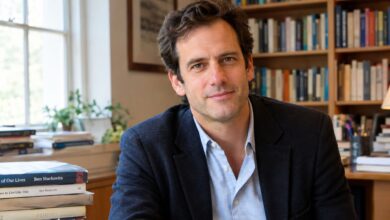

Andrew Rawnsley is one of the best-known figures in British political journalism, with a career spanning more than four decades across newspapers, radio and television. As a political commentator and author, he has reported on some of the most significant developments in modern British politics, particularly the rise and evolution of New Labour. His work has combined political reporting, analysis and long-form writing, making him a familiar name to readers interested in Westminster and British government.
Quick Bio of Andrew Rawnsley
| About | Details |
|---|---|
| Full Name | Andrew Nicholas James Rawnsley |
| Date of Birth | 5 January 1962 |
| Birthplace | Leeds, England |
| Profession | Journalist, Political Commentator, Author, Broadcaster |
| Education | University of Cambridge |
| College | Sidney Sussex College |
| Notable Role | Chief Political Commentator and Associate Editor, Politics, at The Observer |
| Major Books | Servants of the People; The End of the Party |
| Spouse | Jane Hall |
| Children | Three daughters |
| Nationality | British |
Early Life and Education
Andrew Rawnsley was born on 5 January 1962 in Leeds, England. He later studied at the University of Cambridge, attending Sidney Sussex College. His academic background in history provided a strong foundation for a career that would require an understanding of political institutions, historical developments and the personalities shaping public life.
Cambridge has produced many prominent journalists, politicians and writers, and Rawnsley developed his interest in politics during a period when Britain’s political landscape was undergoing considerable change. His education helped prepare him for the research, writing and analytical skills required in political journalism.
Beginning of His Journalism Career
Rawnsley’s professional journalism career began at the BBC in 1983. Working for a major broadcaster gave him early experience of reporting and political coverage before he moved into newspaper journalism.
In 1985, he joined The Guardian. Two years later, he became the newspaper’s parliamentary sketch writer. This was an important stage in his career because parliamentary sketch writing requires more than simply reporting events. It involves observing politicians, debates and parliamentary culture while presenting them in an engaging and often sharply written style.
His experience at Westminster eventually led him toward the broader political commentary for which he became widely recognized.
Career at The Observer
In 1993, Rawnsley moved to The Observer. He subsequently became the newspaper’s chief political commentator and associate editor, positions that established him as a significant voice within British political journalism.
Over the years, he has covered numerous general elections, changes of government, leadership contests and major political controversies. His work has frequently focused on the relationship between political leaders, their advisers and the wider institutions of government.
Rather than limiting his work to day-to-day political reporting, Rawnsley has also written extensively about the personalities and internal dynamics behind major political developments. This approach has been a defining characteristic of his journalism.
Andrew Rawnsley and New Labour
One of the most important areas of Rawnsley’s career has been his coverage of New Labour. The political movement associated with Tony Blair transformed the Labour Party during the 1990s and subsequently won the 1997 general election.
Rawnsley’s first major political book, Servants of the People: The Inside Story of New Labour, was published in 2000. The book examined the early years of Tony Blair’s government and offered an inside account of the political operation surrounding New Labour.
The book helped establish Rawnsley as an author capable of producing detailed political narratives in addition to his newspaper work. It examined the tensions, relationships and decisions involved in the early years of the Blair government.
The End of the Party
Rawnsley’s second major political book, The End of the Party: The Rise and Fall of New Labour, appeared in 2010.
The book examined the later years of New Labour and the challenges faced by the government. Among the major subjects discussed were the Iraq War, the financial crisis, the parliamentary expenses controversy and the 2010 general election.
Together, Rawnsley’s books provide a substantial journalistic account of New Labour’s development from its rise under Tony Blair through its later difficulties. They also demonstrate his particular interest in the internal workings of government and political organizations.
Television and Radio Work
Although newspapers have been central to his career, Rawnsley has also worked extensively in broadcasting. His television and radio appearances have allowed him to discuss political developments with a wider audience.
He has been associated with BBC, Channel 4 and ITV programming and has contributed to political documentaries and discussion programmes. His broadcasting career has complemented his newspaper journalism by giving him opportunities to explain political events and personalities through interviews, documentaries and analysis.
His television work has included projects examining major political figures and periods in British political history. This has strengthened his reputation beyond the printed press.
Awards and Professional Recognition
Rawnsley’s long career has brought professional recognition. He has received journalism awards and was also a finalist for the Orwell Prize for Journalism in 2008.
Such recognition reflects the importance of political journalism within his wider career. His work has combined regular political commentary with investigative reporting, historical context and long-form political writing.
His career is also notable for its longevity. Beginning professional journalism in the early 1980s, he has remained involved in British political reporting through several generations of political leadership.
Andrew Rawnsley’s Writing Style
Rawnsley’s work is generally associated with political analysis that focuses on personalities, institutions and the forces behind political decisions. His experience as a parliamentary sketch writer also contributed to a style capable of combining serious political reporting with observations about Westminster culture.
His books demonstrate another side of his writing. While newspaper columns must respond to current events, books allow him to examine political developments over a much longer period and connect individual events to broader political narratives.
Readers interested in British politics can therefore encounter Rawnsley in several forms: newspaper commentary, political analysis, broadcasting and books.
Current Work
Andrew Rawnsley remains associated with The Observer as its chief political commentator and associate editor for politics. His continued work means that his career is not simply a historical story about British politics in the 1980s, 1990s or 2000s.
His contemporary commentary continues to address Westminster politics and the changing political environment in Britain. This provides continuity between his earlier reporting and his current work as a political journalist.
Personal Life
Rawnsley married Jane Hall in 1990, according to publicly available biographical information. They have three daughters. Compared with his professional life, he has generally kept details about his family away from the center of his public profile.
For that reason, most biographical discussions of Andrew Rawnsley naturally concentrate on his journalism, books and broadcasting career rather than his private life.
Why Andrew Rawnsley Remains a Notable Journalist
Andrew Rawnsley’s importance as a journalist comes from the breadth and longevity of his career. He has worked through major changes in British politics and the media industry, moving between newspapers, broadcasting and book writing.
His reporting on New Labour is particularly significant because his two major books provide detailed journalistic examinations of one of the most important political periods in recent British history. His continuing work also means that he remains connected to current political journalism rather than being known solely for earlier publications.
For readers exploring British political journalism, Rawnsley’s career offers an example of how a journalist can develop from parliamentary reporting into political commentary, broadcasting and authorship. His decades of experience have made him a recognizable figure in discussions about Westminster and British government.
For readers interested in journalists, authors and influential figures in British public life, Mating Press provides a place to explore detailed biographies and career stories, including the professional journey of Andrew Rawnsley.
FAQs About Andrew Rawnsley
Who is Andrew Rawnsley?
Andrew Rawnsley is a British journalist, political commentator, author and broadcaster. He is particularly associated with The Observer, where he has served as chief political commentator and associate editor for politics.
How old is Andrew Rawnsley?
Andrew Rawnsley was born on 5 January 1962. His age therefore changes according to the current date.
Where was Andrew Rawnsley born?
He was born in Leeds, England.
Where did Andrew Rawnsley study?
He studied history at the University of Cambridge and attended Sidney Sussex College.
What newspapers has Andrew Rawnsley worked for?
He began his journalism career at the BBC before joining The Guardian in 1985. He moved to The Observer in 1993.
What books has Andrew Rawnsley written?
His two best-known political books are Servants of the People: The Inside Story of New Labour and The End of the Party: The Rise and Fall of New Labour.
Is Andrew Rawnsley still a journalist?
Yes. He continues to work as a political commentator and associate editor for The Observer.
What is Andrew Rawnsley known for?
He is particularly known for his long career covering British politics, his political commentary and his books examining the rise and later years of New Labour.
You May Also Readr https://matingpresss.co.uk/