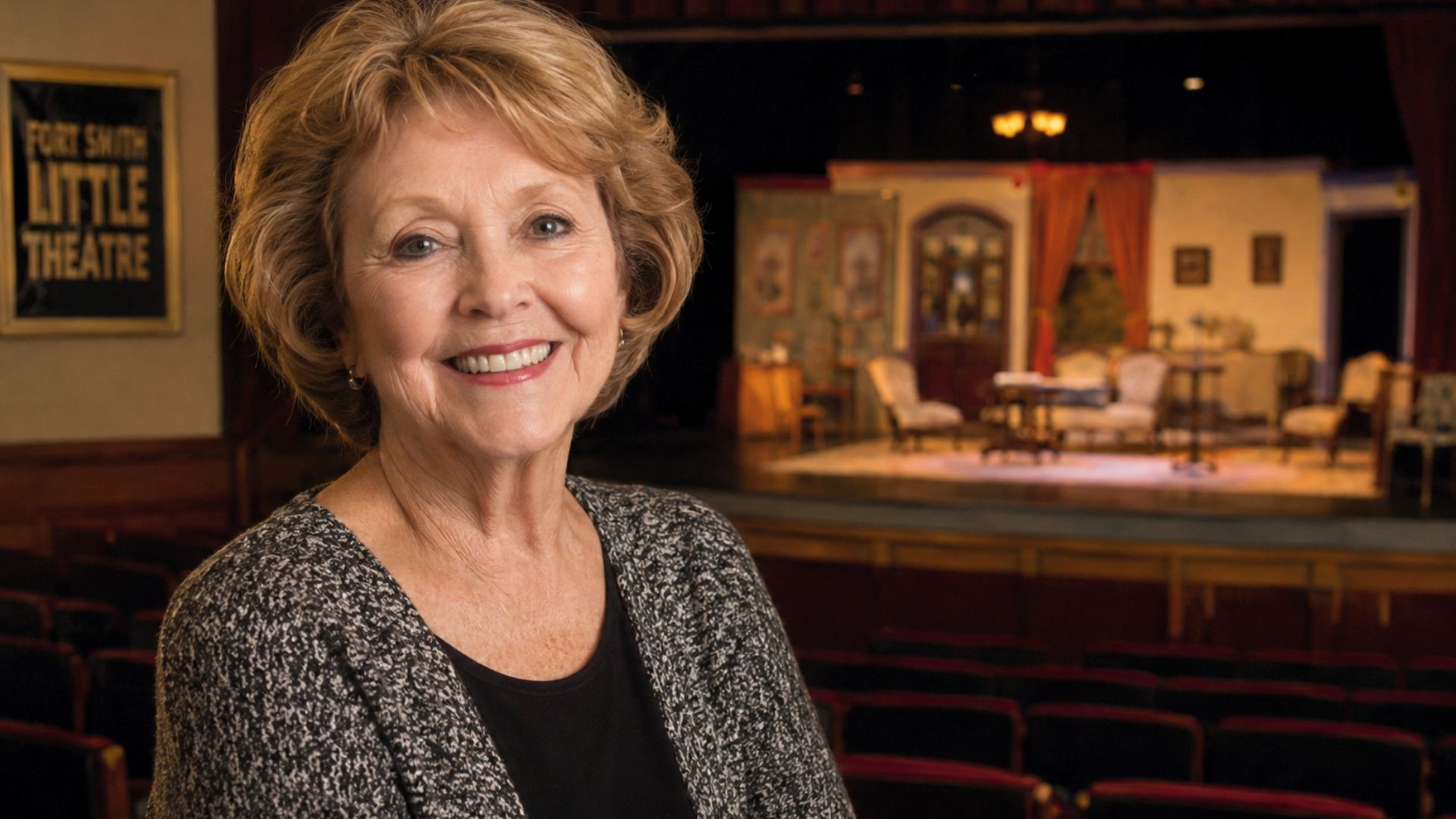

Carole Rogers was a respected member of the Fort Smith, Arkansas, community whose life combined professional work, family, faith, travel, and a deep love for theater. Born in Los Angeles in 1943, she eventually became closely connected with Fort Smith and its cultural community. She worked as an office manager for Cooper Clinic and spent many years contributing to the Fort Smith Little Theatre as both a director and actress. Carole Rogers passed away in March 2026 at the age of 83, leaving behind family members, friends, and a theater community that remembered her for her dedication and involvement.
Quick Bio of Carole Rogers
| Detail | Information |
|---|---|
| Full Name | Carole Rogers |
| Date of Birth | February 4, 1943 |
| Birthplace | Los Angeles, California |
| Date of Death | March 19, 2026 |
| Age at Death | 83 |
| Profession | Office Manager |
| Former Workplace | Cooper Clinic |
| Theater | Fort Smith Little Theatre |
| Theater Roles | Director and Actress |
| Husband | James Rogers |
| Sons | Jimmie Rogers and Michael Rogers |
| Grandchildren | Collin, Caroline, Kate and Kara Rogers |
| Church | Immaculate Conception Catholic Church |
The biographical information above comes from her published obituary, which identifies her parents as Joseph Wewers and Hildagard Gertrude (Hassler) Wewers. It also records her professional career, family relationships, church membership, and long-standing involvement with theater.
Early Life and Background
Carole Rogers was born on February 4, 1943, in Los Angeles, California. She was the daughter of Joseph Wewers and Hildagard Gertrude (Hassler) Wewers. Although she was born on the West Coast, much of the public record surrounding her later years is connected with Fort Smith, Arkansas.
Her life story reflects a journey that eventually brought her into a close-knit community where she developed professional, cultural, and personal connections. Details about her childhood and early education are not widely documented in publicly available sources, so it is important not to add unsupported claims about those years.
What is much clearer is the role she eventually played in the Fort Smith community. Her career and theater activities became significant parts of her identity, while family and faith remained important elements of her life.
Career as an Office Manager
One of the documented parts of Carole Rogers’ professional life was her work as an office manager for Cooper Clinic. This position represented a practical and responsible side of her career, requiring organization, communication, and the ability to manage day-to-day office responsibilities.
Although office administration may appear very different from performing arts, Carole’s life demonstrates how professional responsibilities and creative interests can exist alongside one another. During her years in Fort Smith, she was involved not only in her professional career but also in community theater.
Her work at Cooper Clinic is specifically mentioned in her obituary, which describes her as a former office manager there. This provides one of the clearest documented details about her working life.
Passion for Fort Smith Little Theatre
Theater appears to have been one of the most meaningful parts of Carole Rogers’ community life. She was deeply involved with the Fort Smith Little Theatre, participating as both a director and actress.
Records from the organization show that her involvement extended beyond a casual interest in performing. She was listed among the Fort Smith Little Theatre’s board members in theater publications, demonstrating that she contributed to the organization in an administrative and leadership capacity as well.
A Fort Smith Little Theatre publication from 2014 listed Carole Rogers among the organization’s board members. Other theater records also connect her with productions and backstage responsibilities, showing the breadth of her participation in local theater.
Her work illustrates the important role community theaters can play in bringing people together. For Carole, the theater was not simply a place to appear on stage. It was a community where she could collaborate with performers, directors, technicians, and volunteers while helping create productions for local audiences.
Carole Rogers as a Director and Actress
Being involved as both a director and actress required versatility. An actress contributes directly to a production through performance, while a director helps shape the larger artistic vision and coordinates the work of the cast and production team.
Carole Rogers was associated with both sides of that process. A 2010 report about the Fort Smith Little Theatre production of “Crowns” identified Rogers as the director. The article described the production as a project that was important to her and quoted her discussing the teamwork required to bring the show to the stage.
This provides a particularly useful glimpse into her approach to theater. She viewed a successful production as the result of many people working together rather than the achievement of one individual. That philosophy fits naturally with community theater, where volunteers and performers often contribute their time and talents because of a shared love of the arts.
Other Fort Smith Little Theatre materials also show her participating in productions. Her theater involvement therefore appears to have covered multiple aspects of production rather than being limited to a single role.
Love of Travel and Community
According to her obituary, Carole Rogers loved to travel. While publicly available records do not provide a detailed list of her destinations or specific journeys, the mention of travel gives another dimension to her personality.
Travel can provide opportunities to experience different communities, cultures, performances, and perspectives. For someone involved in theater, an interest in new places and experiences can also become a source of inspiration.
At the same time, Carole maintained strong connections to her local community. Her involvement with the Fort Smith Little Theatre and Immaculate Conception Catholic Church indicates that community relationships were an important part of her life.
Family Life
Carole Rogers was married to James Rogers, who died before her. She was survived by her two sons, Jimmie Rogers and Michael Rogers, along with their wives, Lesley and Kerry.
She also had four grandchildren: Collin Rogers, Caroline Rogers, Kate Rogers, and Kara Rogers. Her family remained an important part of the legacy described in her obituary.
Public biographies of private individuals often contain fewer details about family life than biographies of entertainers or public figures. In Carole’s case, the available record focuses on the people closest to her and the community activities that defined her life.
Faith and Community Connections
Carole Rogers was a member of Immaculate Conception Catholic Church. Her religious affiliation was another documented part of her community life and was included in her obituary alongside her professional and theater activities.
Her connections with church, family, work, and theater show a life built around several different communities. Rather than being remembered for only one career achievement, she appears to have made an impact through consistent participation in the organizations and activities that mattered to her.
Death and Final Arrangements
Carole Rogers died on March 19, 2026, in Montgomery, Alabama, at the age of 83. Her death was followed by funeral arrangements in Fort Smith.
A vigil service was scheduled at Edwards Funeral Home Chapel, followed by a funeral Mass at Immaculate Conception Catholic Church. Burial was planned at Holy Cross Cemetery.
Her death was also remembered within the Fort Smith Little Theatre community. The organization’s current donor listing includes a reference to “Friends of Carole Rogers,” reflecting the continuing connection between her memory and the theater community she served.
The Legacy of Carole Rogers
The legacy of Carole Rogers is best understood through the combination of her professional career, family relationships, faith, and commitment to community theater. She was not simply an office manager or theater participant; she was someone who contributed her time and abilities across different parts of community life.
Her involvement with the Fort Smith Little Theatre is particularly notable because community theater depends heavily on people willing to perform, direct, organize, volunteer, and support productions behind the scenes. Carole took on several of these responsibilities during her years with the organization.
Her story also demonstrates that a meaningful legacy does not always come from national fame or widespread celebrity. Sometimes it is created through years of participation in a local community, relationships with family and friends, and dedication to creative activities that bring people together.
For readers looking into the life of Carole Rogers, the available records present a picture of a woman remembered for her work, theatrical passion, family, faith, and community involvement. Her contributions to Fort Smith Little Theatre remain an important part of how her life can be understood and remembered.
At Mating Press, we believe stories about individuals such as Carole Rogers deserve to be presented with care and respect. Her life offers an example of how professional dedication, creativity, family, faith, and community service can come together to create a lasting personal legacy.
FAQs About Carole Rogers
Who was Carole Rogers?
Carole Rogers was a Fort Smith, Arkansas, community member who worked as an office manager for Cooper Clinic and was deeply involved with the Fort Smith Little Theatre as a director and actress.
When was Carole Rogers born?
Carole Rogers was born on February 4, 1943, in Los Angeles, California.
When did Carole Rogers die?
Carole Rogers died on March 19, 2026, in Montgomery, Alabama. She was 83 years old.
Was Carole Rogers involved in theater?
Yes. She was actively involved with the Fort Smith Little Theatre and participated as both a director and actress. Theater records also show her involvement in organizational and production activities.
Who were Carole Rogers’ children?
Carole Rogers had two sons, Jimmie Rogers and Michael Rogers. She also had four grandchildren: Collin, Caroline, Kate, and Kara Rogers.
What was Carole Rogers’ profession?
Carole Rogers was a former office manager for Cooper Clinic. Alongside her professional career, she devoted considerable time to community theater.
What is Carole Rogers remembered for?
She is remembered for her involvement with the Fort Smith community, her work at Cooper Clinic, her love of travel, her faith, her family, and especially her contributions to the Fort Smith Little Theatre as a director and actress.
You May Also Readr https://matingpresss.co.uk/