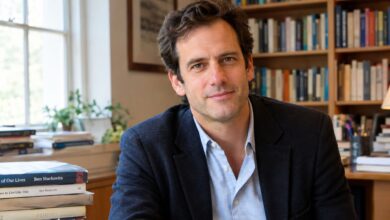

Stephen Daldry is an acclaimed English director and producer whose career has made a significant impact on film, television, and theatre. Known for emotionally powerful storytelling, carefully developed characters, and visually distinctive productions, he has directed some of the most respected projects of the past several decades. From Billy Elliot and The Hours to The Crown and The Inheritance, his work demonstrates an ability to move comfortably between cinema, television, Broadway, and London’s theatre scene. His achievements across several forms of entertainment have established him as one of Britain’s most recognizable contemporary directors.
Quick Bio of Stephen Daldry
| Detail | Information |
|---|---|
| Full Name | Stephen David Daldry |
| Date of Birth | 2 May 1960 |
| Place of Birth | Dorset, England |
| Profession | Director and Producer |
| Fields | Film, Television and Theatre |
| Best Known For | Billy Elliot, The Hours, The Crown |
| Major Theatre Work | Billy Elliot: The Musical, The Inheritance |
| Awards | Tony Awards, Emmy Awards and numerous nominations |
Early Life and Career
Stephen Daldry was born on 2 May 1960 in Dorset, England. His professional journey developed strongly through theatre before he became an internationally recognized film director. Theatre gave him an important foundation for understanding actors, dialogue, movement, staging, and emotional storytelling.
Rather than treating film and theatre as completely separate disciplines, Daldry developed a directing style that allowed techniques from the stage to influence his screen work. His early theatrical experience helped establish the detailed actor-focused approach that later became a major characteristic of his films.
His theatre career included important work with London’s Gate Theatre and Royal Court Theatre. These experiences placed him in an environment where challenging material, ambitious performances, and contemporary storytelling were particularly important.
Breakthrough With Billy Elliot
Daldry’s major breakthrough in cinema came with Billy Elliot, released in 2000. The film follows a young boy from a mining community who discovers a passion for ballet while his family and community are facing difficult social and economic circumstances.
The film became internationally successful because it combined an emotional coming-of-age story with themes involving family, ambition, class, and personal identity. Daldry’s direction helped balance the film’s dramatic moments with warmth and humor.
His work on Billy Elliot earned him an Academy Award nomination for Best Director. The film also became the foundation for the successful stage musical adaptation, which Daldry later directed. The musical won the Tony Award for Best Musical in 2009, while Daldry won the Tony for directing a musical.
The Hours and The Reader
Following the success of Billy Elliot, Daldry directed The Hours in 2002. The film, based on Michael Cunningham’s novel, connects the lives of three women across different periods and explores subjects including loneliness, identity, relationships, and the search for meaning.
The Hours received substantial critical recognition, and Daldry again received an Academy Award nomination for Best Director. His direction demonstrated that he could handle complex narratives involving multiple characters and timelines without losing their emotional connections.
Another important project was The Reader, released in 2008. The drama, adapted from Bernhard Schlink’s novel, deals with memory, guilt, secrecy, morality, and the consequences of decisions made during difficult historical circumstances. Daldry’s direction earned him another Academy Award nomination for Best Director, making The Reader his third film to receive a nomination in that category. His work across these productions established a reputation for directing serious dramas centered on complicated human relationships.
Extremely Loud & Incredibly Close and Later Films
Daldry continued his film career with Extremely Loud & Incredibly Close in 2011. Based on Jonathan Safran Foer’s novel, the film follows a young boy dealing with grief after the death of his father while attempting to understand a mysterious clue connected to him.
The film continued Daldry’s interest in stories that explore childhood, loss, family relationships, and emotional resilience. He later directed Trash in 2014, a crime drama inspired by Andy Mulligan’s novel and set in Brazil. The film focused on three boys who discover information that puts them in danger and become involved in a larger mystery.
Stephen Daldry and The Crown
Daldry also made a major contribution to television through Netflix’s historical drama The Crown. He worked as a director and executive producer on the series, which dramatizes important periods in the life of Queen Elizabeth II and the British royal family.
His direction helped establish the show’s early visual and dramatic identity. Daldry directed episodes including “Hyde Park Corner” and “Paterfamilias.” His work on The Crown earned him Emmy recognition, including a directing Emmy for the episode “Paterfamilias.” The Television Academy lists nine Emmy nominations and two wins for Daldry, including recognition as an executive producer on the series.
His involvement with the production also showed how effectively his theatrical understanding could translate into large-scale television drama. The series required detailed period recreation, controlled performances, and careful attention to political and personal relationships.
Success on Broadway
Although many audiences know Daldry primarily through his films, theatre remains one of the most important parts of his career. His stage achievements include productions that have received major recognition on Broadway.
Billy Elliot: The Musical was particularly important because Daldry helped transfer the emotional world of his original film into a successful stage production. His direction contributed to the show’s success and earned him the 2009 Tony Award for Best Direction of a Musical.
In 2020, he won another Tony for Best Direction of a Play for The Inheritance, written by Matthew López. The production received four Tony wins from eleven nominations, with Daldry among its recognized winners.
Directing Style and Legacy
One of the defining characteristics of Stephen Daldry’s work is his focus on human emotion. His stories frequently place ordinary or vulnerable characters in extraordinary circumstances, allowing personal experiences to become the center of the narrative.
He also has a strong reputation for working closely with actors. His theatre background gives him an understanding of performance that is particularly visible in character-driven dramas. Whether working with a child performer in Billy Elliot, an ensemble cast in The Hours, or a large television production such as The Crown, his directing often emphasizes emotional authenticity.
Another important feature of his career is versatility. He has moved between independent-style dramas, major film productions, television series, musicals, and serious stage plays without becoming limited to one medium.
Why Stephen Daldry Remains Important
The career of Stephen Daldry stands out because of its unusual combination of film, television, and theatre achievements. Three Academy Award nominations for directing helped establish his reputation in cinema, while Tony and Emmy victories demonstrated his continued success beyond film.
His projects often explore family, ambition, grief, identity, history, and social circumstances. Instead of relying solely on spectacle, Daldry generally places characters and their emotional journeys at the heart of his productions. That approach has helped many of his works remain memorable long after their original releases.
For readers interested in influential British directors, Daldry’s career provides an excellent example of how theatrical discipline can translate into successful international filmmaking and television. His body of work continues to demonstrate the value of thoughtful storytelling, strong performances, and carefully constructed dramatic worlds.
For more articles covering notable personalities, entertainment, and other interesting subjects, readers can explore Mating Press, an English website that brings together accessible stories and informative content for a broad audience.
FAQs About Stephen Daldry Director
Who is Stephen Daldry?
Stephen Daldry is an English director and producer known for his work in film, television, and theatre. His notable projects include Billy Elliot, The Hours, The Reader, The Crown, and The Inheritance.
What is Stephen Daldry best known for?
He is particularly known for directing Billy Elliot and The Hours, as well as his work on the television series The Crown. His theatre career is also highly regarded.
Has Stephen Daldry won a Tony Award?
Yes. Daldry has won Tony Awards for his theatre directing, including Best Direction of a Musical for Billy Elliot: The Musical and Best Direction of a Play for The Inheritance.
Did Stephen Daldry direct The Crown?
Yes. Daldry directed episodes of The Crown and also served as an executive producer. He won an Emmy for directing the episode “Paterfamilias.”
How many Oscar nominations has Stephen Daldry received for directing?
Stephen Daldry has received three Academy Award nominations for Best Director, for Billy Elliot, The Hours, and The Reader.
You May Also Readr https://matingpresss.co.uk/