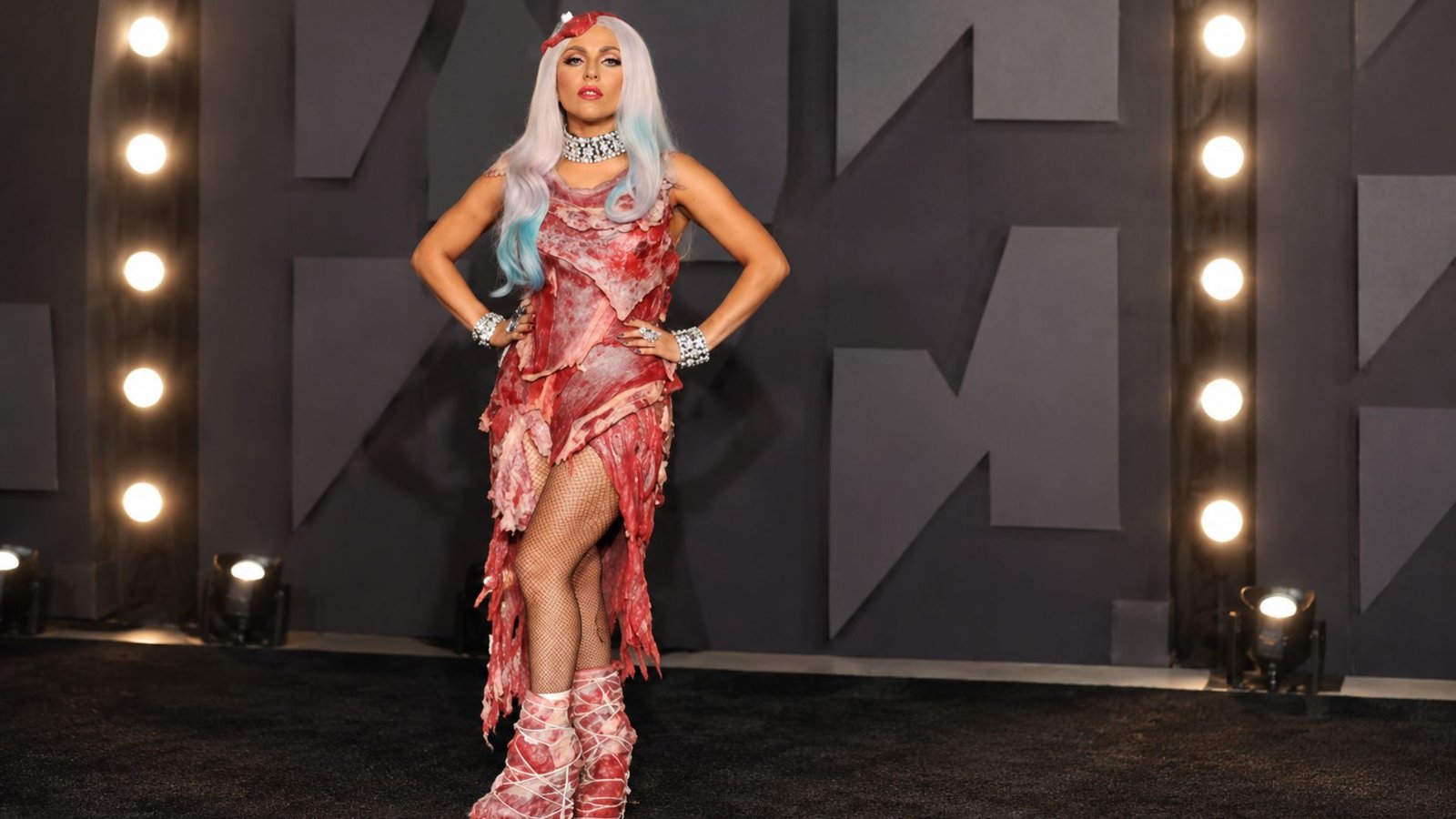

The Lady Gaga meat dress remains one of the most unforgettable fashion moments in celebrity history. When Lady Gaga appeared at the 2010 MTV Video Music Awards wearing an outfit made from real raw beef, she immediately captured the world’s attention. The unusual dress sparked conversations about fashion, artistic freedom, animal rights, and the messages celebrities communicate through their clothing. More than a decade later, the outfit is still remembered as a defining moment in Gaga’s career. While some people viewed it as an outrageous fashion statement, others saw a deeper message about equality and personal freedom. Understanding the story behind the dress reveals why it became much more than an unusual red-carpet outfit.
Quick Bio of Lady Gaga
| Detail | Information |
|---|---|
| Full Name | Stefani Joanne Angelina Germanotta |
| Professional Name | Lady Gaga |
| Date of Birth | March 28, 1986 |
| Age | 40 years (as of October 2026) |
| Birthplace | New York City, United States |
| Profession | Singer, songwriter, actress |
| Nationality | American |
| Famous Song | Bad Romance |
| Fashion Designer of Meat Dress | Franc Fernandez |
| Event | 2010 MTV Video Music Awards |
| Known For | Music, acting, bold fashion, artistic expression |
What Was Lady Gaga’s Meat Dress?
The Lady Gaga meat dress was an extraordinary outfit made from real pieces of raw beef. Unlike traditional celebrity gowns created from silk, satin, or other fabrics, this dress used animal flesh as its primary material. Its unconventional appearance made it one of the most discussed outfits in modern entertainment history.
Lady Gaga wore the dress to the MTV Video Music Awards on September 12, 2010. The ceremony took place in Los Angeles, California, and was an important evening for the singer. She won several awards, including Video of the Year for her popular song Bad Romance. Her unusual clothing choice, however, became almost as famous as her musical achievements that night.
The dress was designed to attract attention, but it also reflected Gaga’s approach to fashion as a form of performance art. She frequently used unusual outfits, dramatic makeup, and striking accessories to challenge expectations and express her individuality. The meat dress became the most recognizable example of that creative approach.
Who Designed Lady Gaga’s Meat Dress?
The famous outfit was created by fashion designer Franc Fernandez, who worked with Gaga’s creative team to bring the unusual concept to life. Her stylist, Nicola Formichetti, also played a role in shaping the look. Their collaboration produced an outfit that challenged the traditional idea of what a celebrity should wear to a major awards ceremony.
Reports about the dress’s construction indicated that it used approximately 40 pounds of Argentine beef. Pieces of meat were carefully arranged and attached to create a garment that could be worn on stage. The process required creative planning because raw meat is heavy, delicate, and difficult to handle compared with conventional clothing materials.
The outfit was completed with matching accessories, including meat-covered shoes, a headpiece, and a purse. These details made the appearance a complete fashion statement rather than simply a dress made from an unusual material.
Fernandez’s creation demonstrated how fashion could move beyond conventional tailoring and become a conversation piece. Although many designers experiment with unconventional fabrics, few have created a look that generated the same level of public discussion as Gaga’s meat dress.
Why Did Lady Gaga Wear the Meat Dress?
One of the most frequently asked questions about the outfit concerns its meaning. Gaga explained that the dress represented ideas about equality, freedom, and standing up for personal rights. Its message was connected to debates taking place in the United States in 2010, particularly discussions surrounding LGBTQ+ rights and the military’s former “Don’t Ask, Don’t Tell” policy.
The policy restricted openly gay and lesbian service members from serving openly in the United States military. Gaga was an outspoken advocate for LGBTQ+ equality and used her public platform to encourage people to challenge discrimination.
The meat dress became associated with her argument that people should not be treated as objects or denied their rights. Gaga also used the phrase “I am not a piece of meat” when discussing its symbolism, connecting the outfit to the idea that individuals deserve dignity and respect.
However, the dress was open to different interpretations. Some viewers focused on its political message, while others considered it primarily a provocative fashion experiment. This mixture of artistic expression and controversy helped make the outfit so memorable.
Public Reaction and Controversy
The public reaction to Lady Gaga’s meat dress was immediate and divided. Fashion fans praised her willingness to take risks, while critics questioned whether wearing raw meat was appropriate for a televised awards ceremony.
Animal-rights advocates, including representatives of PETA, criticized the outfit because it used animal flesh as clothing. They argued that the dress made light of animal welfare and was an unnecessarily shocking way to communicate a message.
Other observers questioned whether the political statement could have been expressed through less controversial means. Images of the outfit circulated widely, and discussions about its meaning extended beyond fashion magazines into mainstream entertainment coverage.
At the same time, many supporters viewed the dress as an example of Gaga’s commitment to creative freedom. They argued that its unusual appearance forced people to think about the relationship between clothing, identity, and social expectations.
The controversy demonstrated that fashion can generate discussion far beyond appearance alone. Whether people admired or disliked the outfit, its impact was difficult to ignore.
How Was the Meat Dress Preserved?
Preserving a garment made from real meat presented a significant challenge. Ordinary clothes can be cleaned and stored for decades, but raw beef deteriorates quickly without appropriate treatment.
Following the awards ceremony, the dress underwent preservation procedures involving drying and taxidermy-related techniques. The process changed its appearance, leaving the material darker and more rigid than it had been when Gaga originally wore it.
The preserved dress was subsequently displayed at the Rock & Roll Hall of Fame as part of an exhibition celebrating women in rock music. Its transformation into a museum exhibit reflected its importance as a cultural artifact rather than merely a temporary celebrity outfit.
The preservation story also added another unusual chapter to the dress’s history. A garment designed for one evening of public attention became an object that could be studied and remembered years later.
Where Is Lady Gaga’s Meat Dress Today?
The meat dress remains an important part of Gaga’s fashion legacy. It has been preserved and exhibited, allowing fans to learn about the story behind one of her most famous public appearances.
In recent years, the outfit has been associated with Haus of Gaga, an exhibition space at the Park MGM resort in Las Vegas. The display celebrates the singer’s distinctive style and features memorable items from different stages of her career.
For visitors, the dress represents a moment when celebrity fashion became a worldwide cultural conversation. Its continued recognition shows how a single outfit can remain relevant long after the original event has ended.
The Lasting Influence of the Meat Dress
The Lady Gaga meat dress helped establish the singer as an artist who was willing to challenge conventional expectations. Throughout her career, Gaga has experimented with dramatic silhouettes, theatrical costumes, and fashion concepts that encourage audiences to look beyond appearance.
The dress also demonstrated the power of visual storytelling. A single outfit became connected to discussions about equality, animal welfare, artistic expression, and celebrity influence. Its significance came not only from its unusual material but also from the conversations it inspired.
Although opinions about the dress continue to differ, its place in pop culture is undeniable. It remains a reminder that fashion can be used to communicate ideas, challenge social norms, and create memorable moments.
FAQs About Lady Gaga’s Meat Dress
1. When did Lady Gaga wear the meat dress?
Lady Gaga wore the famous outfit at the MTV Video Music Awards on September 12, 2010.
2. Was Lady Gaga’s meat dress made from real meat?
Yes, the dress was made from real raw beef rather than conventional fabric.
3. Who designed the Lady Gaga meat dress?
Fashion designer Franc Fernandez created the outfit, working alongside Gaga’s creative team.
4. Why did Lady Gaga wear a dress made of meat?
Gaga connected the outfit to personal freedom, equality, and standing up for individual rights. It also reflected her unconventional approach to artistic expression.
5. Was the meat dress controversial?
Yes. The outfit received criticism from animal-rights advocates and sparked debate about whether provocative fashion was an appropriate way to communicate a message.
6. What happened to the meat dress after the awards?
The garment underwent preservation treatment and was later displayed as part of a museum exhibition.
Conclusion You May Also Readr : lady gaga meat dress
The Lady Gaga meat dress remains one of the most recognizable outfits in celebrity history because it combined unusual design with a wider cultural message. From its creation by Franc Fernandez to the controversy surrounding its material and symbolism, the dress became a defining example of Gaga’s fearless approach to fashion. Its preservation and continued recognition demonstrate how a single appearance can influence popular culture for years. For readers interested in celebrity stories, iconic outfits, and the people behind memorable entertainment moments, Mating Press explores the fascinating stories that make famous personalities and their legacies worth remembering.