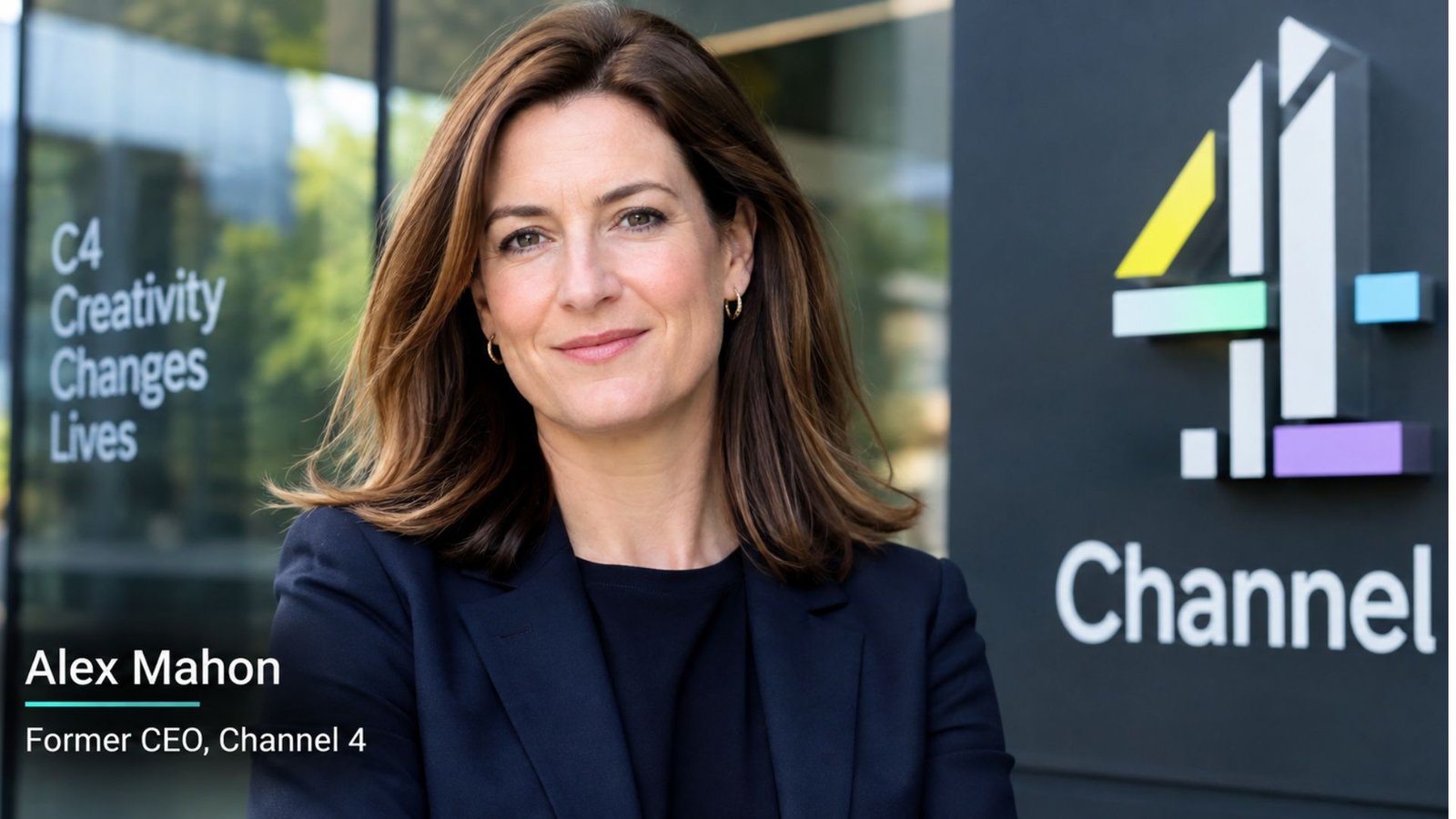

Alex Mahon is a prominent British media and technology executive best known for her leadership of Channel 4. Her career has crossed several industries, from physics and technology to television production and broadcasting. She became Channel 4’s first female chief executive in 2017 and spent nearly eight years guiding the organization through significant changes in the media landscape. Her tenure was marked by digital transformation, international ambitions, organizational expansion outside London, and a strong focus on inclusion and workplace culture.
Quick Bio of Alex Mahon
| Detail | Information |
|---|---|
| Full Name | Alex Mahon |
| Profession | Media and Technology Executive |
| Nationality | British |
| Best Known For | Former Chief Executive of Channel 4 |
| Channel 4 Role | Chief Executive, 2017–2025 |
| Education | Studied Physics and completed a PhD |
| Previous Leadership | Shine Group and Foundry |
| Industry | Media, Television, Technology |
| Notable Achievement | First female CEO of Channel 4 |
Early Life and Education
Alex Mahon’s professional journey began in an area that might seem far removed from television. She studied physics and went on to complete a PhD, developing a strong analytical and scientific background. Her education helped establish a foundation for problem-solving and strategic thinking, qualities that later became important throughout her business career.
Rather than remaining in academia, Mahon moved toward business and consulting. This transition allowed her to develop experience in strategy, management and organizational development. Her ability to combine analytical thinking with commercial decision-making eventually helped her move into the rapidly changing worlds of technology and media.
Move Into Technology and Media
Mahon built an unusual career by working across technology, production and broadcasting. One of the important stages of her career came at Shine Group, the international production company founded by Elisabeth Murdoch.
As chief executive of Shine Group, Mahon helped oversee the company’s expansion and development. Under her leadership, Shine grew into a major international production business with numerous creative labels operating across several countries. Her experience at Shine gave her a deep understanding of television production, creative businesses and the commercial pressures facing the media industry.
She later became chief executive of Foundry, a technology company known for software used in visual effects and creative production. Foundry’s technology has been associated with major film and television productions, making Mahon’s leadership there another important step in her understanding of the relationship between technology and entertainment.
Becoming Channel 4’s First Female CEO
In 2017, Alex Mahon was appointed chief executive of Channel 4. Her appointment was significant because she became the broadcaster’s first female chief executive.
Channel 4 occupies a distinctive position in British broadcasting. Unlike many traditional broadcasters, its public-service mission is combined with a commercially funded model. It has historically been known for taking creative risks, supporting new talent and producing programmes that address challenging social and cultural subjects.
Mahon arrived at a time when the television industry was undergoing dramatic changes. Viewers were increasingly moving from traditional television schedules toward streaming platforms, on-demand services and digital content. Her leadership therefore involved not simply managing an established broadcaster but preparing it for a fundamentally different media environment.
Digital Transformation at Channel 4
One of the defining aspects of Mahon’s tenure was Channel 4’s digital transformation. Streaming changed how audiences consumed television, while international technology companies and subscription platforms created new competition for British broadcasters.
Mahon pushed Channel 4 to become more digitally focused and to develop its streaming proposition. The broadcaster increasingly emphasized its digital audience and sought to adapt its content strategy to younger viewers and changing viewing habits.
This transformation was particularly important because traditional television advertising models faced increasing pressure. Channel 4 needed to remain relevant to audiences who were spending more time watching content online and through connected devices.
The Fight Over Channel 4’s Future
Mahon also became a prominent voice during debates about the future ownership of Channel 4. The British government considered proposals to privatize the broadcaster, creating significant uncertainty about its long-term structure.
Mahon strongly defended Channel 4’s existing model and argued for the value of its public-service role. The debate became one of the most important political and commercial issues during her time as chief executive.
Ultimately, the government’s plans for outright privatization were abandoned. Instead, changes were introduced to Channel 4’s operating framework, allowing the organization to pursue greater financial and commercial flexibility while remaining publicly owned.
Expanding Beyond London
Another major part of Mahon’s leadership was Channel 4’s effort to increase its presence outside London. The broadcaster invested in regional offices and sought to distribute jobs, production activity and creative opportunities more widely across the United Kingdom.
This approach reflected a broader discussion about the concentration of Britain’s media industry in London. By expanding its regional footprint, Channel 4 aimed to access talent and stories from different parts of the country.
For Mahon, this was also connected to the broadcaster’s public-service mission. A wider geographic presence could help Channel 4 represent a broader range of communities and perspectives.
Programmes and Creative Success
Mahon’s years at Channel 4 coincided with a period of notable creative success. The broadcaster was associated with acclaimed programmes and films across drama, entertainment, documentary and factual television.
Projects such as It’s a Sin demonstrated Channel 4’s ability to combine strong storytelling with important social themes. Other successful productions and partnerships included The Piano and internationally recognized films such as The Zone of Interest, The Banshees of Inisherin, All of Us Strangers and Poor Things.
These successes reinforced Channel 4’s reputation for taking creative risks and supporting distinctive projects. They also illustrated the importance of maintaining a strong creative identity while adapting to digital competition.
Workplace Culture and Inclusion
Mahon also attracted attention for her approach to workplace culture. During her leadership, Channel 4 introduced policies dealing with issues including menopause and pregnancy loss.
Such initiatives reflected a wider movement within British workplaces toward more supportive policies for employees dealing with major personal and health-related life events. Channel 4 presented several of these policies as pioneering approaches that could influence other organizations.
Mahon’s leadership therefore extended beyond programming and financial performance. She also emphasized the importance of creating a workplace where employees could feel supported and where diversity and inclusion were treated as important organizational priorities.
Leaving Channel 4
After nearly eight years at the helm, Mahon announced in 2025 that she would step down as chief executive. Her departure marked the end of a significant period in Channel 4’s history.
Her tenure had coincided with major changes in the broadcasting industry, including the rapid growth of streaming, changing advertising models, increased competition for audiences and debates over the future structure of public-service media.
Mahon left behind an organization that had undergone substantial digital and organizational change. Her career at Channel 4 also established her as one of Britain’s most recognizable senior figures in television and media management.
Alex Mahon’s Leadership Legacy
Alex Mahon’s career is notable because it combines scientific education, technology, television production and broadcasting leadership. Her background in physics gave her an analytical foundation, while her work at Shine Group and Foundry provided experience in creative industries and technology.
At Channel 4, she became associated with digital transformation, regional expansion, creative programming and workplace reform. She also played a highly visible role in debates concerning the broadcaster’s ownership and public-service mission.
Her story demonstrates how leadership in modern media requires more than understanding television itself. Executives must understand technology, audience behavior, commercial pressures, workplace culture and the wider social role of media organizations.
For readers interested in influential figures in British broadcasting and business, Alex Mahon’s career offers a particularly interesting example of how different professional disciplines can come together. Her journey from physics to technology and ultimately to one of Britain’s most important broadcasting organizations makes her career distinctive. For more engaging biographies and profiles of notable personalities, readers can continue exploring Mating Press, where stories about influential people and their careers are presented in an accessible way.
FAQs About Alex Mahon
Who is Alex Mahon?
Alex Mahon is a British media and technology executive best known for serving as chief executive of Channel 4 from 2017 to 2025.
When did Alex Mahon become Channel 4 CEO?
Alex Mahon became chief executive of Channel 4 in 2017. She was the broadcaster’s first female chief executive.
What did Alex Mahon study?
Mahon studied physics and completed a PhD before moving into consulting, technology and media leadership.
What companies did Alex Mahon lead before Channel 4?
Before joining Channel 4, Mahon held senior leadership positions at Shine Group and Foundry.
Why is Alex Mahon significant in British broadcasting?
She is significant for leading Channel 4 during a period of major digital transformation and for defending its public-service model during debates about potential privatization.
When did Alex Mahon leave Channel 4?
Mahon announced in 2025 that she would step down after nearly eight years as Channel 4’s chief executive.
You May Also Readr : alex mahon