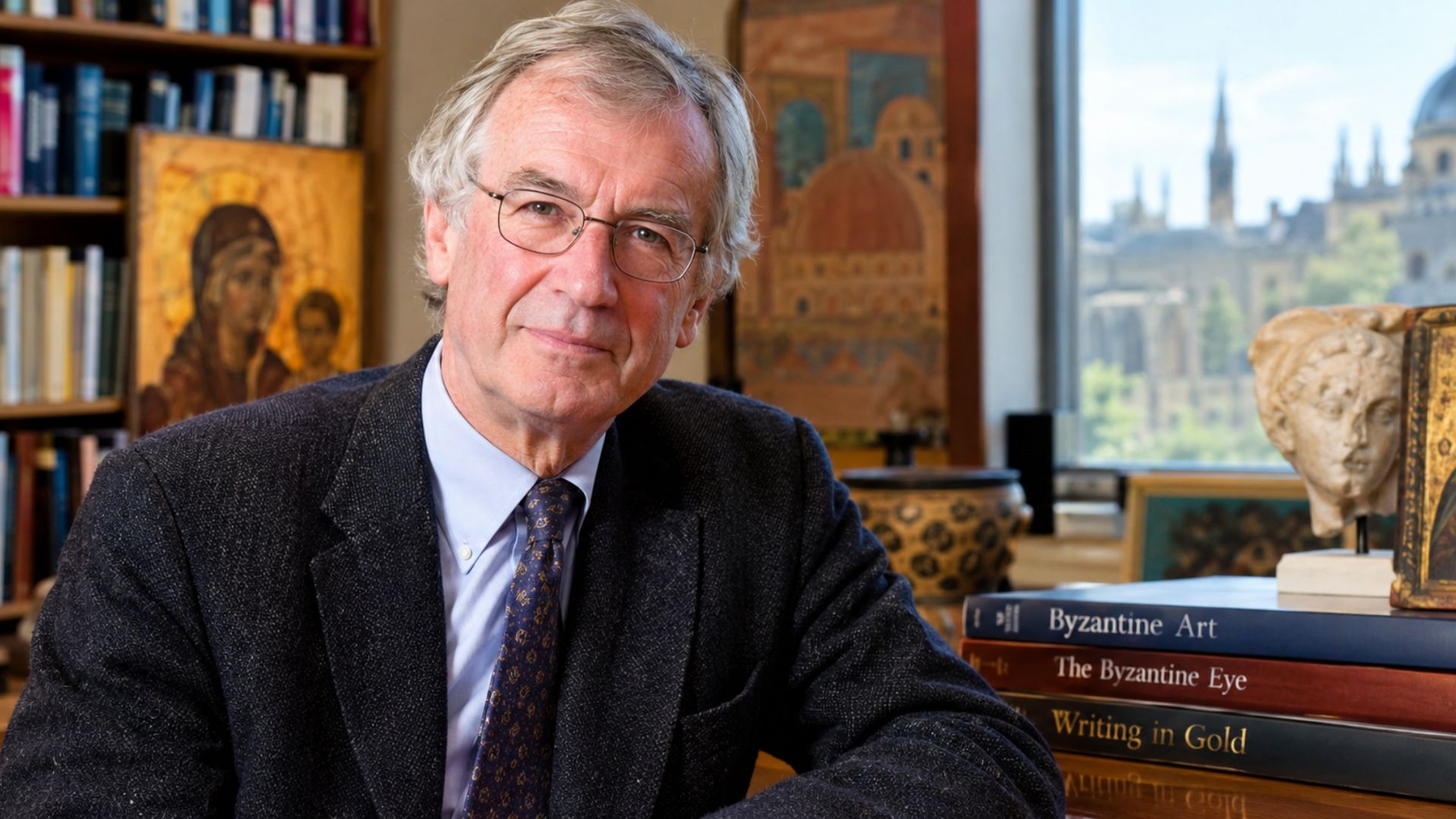

Robin Cormack is a distinguished British art historian and classicist best known for his scholarship on Byzantine art, icons, Greek art, and the cultural history surrounding religious imagery. Over several decades, he has built a respected academic career through teaching, research, writing, curatorial work, and contributions to major exhibitions. His work has helped make Byzantine art more accessible to readers while also providing detailed scholarly insight into the traditions, artists, patrons, and societies that shaped it.
Quick Bio of Robin Cormack
| Detail | Information |
|---|---|
| Full Name | Robin Sinclair Cormack |
| Date of Birth | 27 September 1938 |
| Nationality | British |
| Profession | Art Historian, Classicist, Author and Academic |
| Main Field | Byzantine Art and Greek Art |
| Education | Exeter College, Oxford; Courtauld Institute of Art |
| Known For | Research on Byzantine art, icons and artistic patronage |
| Former Academic Role | Professor of History of Art |
| Spouse | Mary Beard |
| Children | Four, including Raphael Cormack |
| Notable Books | Writing in Gold, The Byzantine Eye, Painting the Soul, Byzantine Art and Icons |
Early Life and Education
Robin Sinclair Cormack was born on 27 September 1938 in Britain. His academic interests eventually developed around the history of art, classical civilization, and Byzantine culture. He attended Bristol Grammar School before continuing his education at Exeter College, Oxford.
Cormack later studied at the Courtauld Institute of Art in London, one of Britain’s leading institutions for the study of art history. His doctoral research focused on Thessaloniki following the Byzantine period of iconoclasm. This research helped establish the foundations for his later specialization in Byzantine visual culture.
His education placed him at the intersection of several disciplines. Rather than viewing art simply as a collection of beautiful objects, Cormack has approached it as evidence of religious beliefs, political structures, social relationships, and cultural change.
Academic Career
Cormack developed a long academic career at the Courtauld Institute of Art. He became a lecturer there in 1966 and remained associated with the institution for many years. His academic career also included work at the Warburg Institute and later a return to the Courtauld, where he became Professor of History of Art.
His responsibilities were not limited to teaching. He was involved in research, administration, museum-related scholarship, and the organization of exhibitions. He served as deputy director of the Courtauld from 1999 to 2002.
After retiring from the Courtauld in 2004, Cormack continued working as a scholar. His later activities included research fellowships, visiting academic positions, and lectures. His continued involvement with universities and research institutions demonstrates that retirement from a formal academic post did not mark the end of his contribution to art history.
Expertise in Byzantine Art
The area most closely associated with Robin Cormack is Byzantine art. The Byzantine Empire existed for more than a thousand years, and its artistic traditions influenced religious and cultural life across the eastern Mediterranean and beyond.
Cormack’s scholarship has paid particular attention to icons, religious paintings, artistic patronage, and the relationship between images and society. Icons were not simply decorative objects in Byzantine culture. They could have profound religious and social significance, and understanding them requires consideration of theology, historical circumstances, artistic techniques, and the people who commissioned or viewed them.
Cormack’s work has therefore helped explain Byzantine art within its wider cultural setting. His research also connects Greek, Roman, Christian, and Byzantine traditions, showing how artistic ideas developed and changed over time.
Books and Publications
Robin Cormack has written several influential books that have contributed to the study of Byzantine and religious art.
One of his best-known works is Writing in Gold: Byzantine Society and Its Icons. The book examines icons within the broader framework of Byzantine society and explores how religious images interacted with cultural and social life.
Another important publication is The Byzantine Eye: Studies in Art and Patronage. As its title suggests, the book considers the role of patronage and the circumstances in which artworks were produced. This is important because the creation of historical art was often influenced by emperors, churches, wealthy individuals, and other patrons.
Cormack also wrote Painting the Soul: Icons, Death Masks and Shrouds, a study that examines different forms of visual representation and their relationship to ideas about identity, death, memory, and spirituality.
His other publications include Byzantine Art, a concise introduction to the subject, and Icons, which provides an accessible examination of one of the most recognizable forms of Byzantine religious art.
Major Exhibition Work
Cormack has also made important contributions outside traditional academic publishing. His expertise has been used in major exhibitions devoted to Byzantine and religious art.
One of the most notable projects was the major Byzantium 330–1453 exhibition at the Royal Academy of Arts. Cormack co-curated the exhibition with Maria Vassilaki. The event brought together important works representing the long history of Byzantine civilization and provided visitors with an opportunity to explore Byzantine culture through painting, sculpture, religious objects, manuscripts, and other forms of artistic expression.
His involvement in exhibition work reflects another important aspect of his career: communicating specialist academic knowledge to a wider audience.
Robin Cormack and Mary Beard
Robin Cormack is also known publicly because of his marriage to Mary Beard, one of Britain’s most prominent classicists, historians, authors, and television presenters.
Cormack and Beard married in 1985. Their shared academic interests created a household strongly connected to the study of ancient and classical cultures. Beard is particularly known for her work on ancient Rome, while Cormack’s specialist field is Byzantine and Greek art.
The couple have children, including Raphael Cormack, who has developed his own career as a writer and scholar. Their family has therefore maintained a strong connection to academic and cultural work across different generations.
Research Beyond Byzantine Art
Although Byzantine art is at the center of Cormack’s reputation, his interests extend into broader areas of classical and Mediterranean art history. His work has considered the relationship between Greek and Christian artistic traditions and the ways in which artistic practices developed through different historical periods.
He has also been associated with research concerning Saint Catherine’s Monastery at Mount Sinai, an important site for the preservation of early Christian and Byzantine manuscripts, icons, and other cultural materials.
This broader approach is one reason his work remains relevant to students and readers interested not only in Byzantine history but also in the development of Mediterranean visual culture.
Later Academic Contributions
Cormack continued contributing to scholarship after his retirement from the Courtauld. He has held research and visiting positions and remained involved in academic discussions concerning art history and religious culture.
His continuing publications and scholarly reviews demonstrate the lasting nature of his academic interests. Rather than concentrating only on his earlier career, Cormack has maintained a connection with research and higher education, allowing his expertise to remain part of contemporary discussions about Byzantine studies.
Why Robin Cormack Matters
Robin Cormack’s importance lies in the way he has connected detailed art-historical research with the wider history of society and religion. His books and exhibitions have helped explain why Byzantine art matters and how images can provide evidence about the beliefs, values, institutions, and relationships of historical communities.
His career also demonstrates the importance of interdisciplinary scholarship. Studying an icon, for example, can require knowledge of art, theology, politics, economics, literature, and social history. Cormack’s work brings many of these areas together.
For readers discovering his work today, his books provide an introduction to Byzantine art while his wider academic career illustrates how art history can illuminate the past.
Conclusion
Robin Cormack has established a lasting reputation as a British art historian and classicist whose work has significantly contributed to the understanding of Byzantine art, icons, Greek artistic traditions, and cultural patronage. From his education at Oxford and the Courtauld Institute of Art to his academic career, books, research, and major exhibition projects, his professional life has been closely connected with the study and interpretation of historical art. His marriage to classicist Mary Beard has also placed him within a well-known academic family, but his own achievements stand independently through decades of scholarship. Readers interested in Byzantine culture, art history, icons, and the classical world can find a valuable starting point in his extensive body of work. At Mating Press, we aim to bring readers informative profiles of notable academics, writers, artists, and cultural figures, and Robin Cormack’s career offers an especially interesting example of how academic research can deepen our understanding of history and art.
FAQs About Robin Cormack
Who is Robin Cormack?
Robin Cormack is a British art historian, classicist, author, and academic known particularly for his research and writing on Byzantine art, icons, Greek art, and artistic patronage.
When was Robin Cormack born?
Robin Sinclair Cormack was born on 27 September 1938.
What is Robin Cormack famous for?
He is best known for his scholarship on Byzantine art and icons, as well as books such as Writing in Gold, The Byzantine Eye, Painting the Soul, Byzantine Art, and Icons.
Where did Robin Cormack study?
He studied at Exeter College, Oxford, and later at the Courtauld Institute of Art in London, where he completed doctoral research.
Is Robin Cormack married to Mary Beard?
Yes. Robin Cormack married British classicist Mary Beard in 1985.
What subject did Robin Cormack specialize in?
His principal specialization is Byzantine art, with wider interests in Greek, Roman, Christian, and Mediterranean artistic traditions.
Did Robin Cormack work at the Courtauld Institute of Art?
Yes. He spent a substantial part of his academic career at the Courtauld Institute of Art and eventually became Professor of History of Art there.
What is Robin Cormack’s most notable exhibition work?
He was a co-curator of the major Byzantium 330–1453 exhibition at the Royal Academy of Arts, working with Maria Vassilaki.
You May Also Readr https://matingpresss.co.uk/